

Your learning style can be defined simply as the way you prefer to learn. It is not a measure of intelligence or aptitude, rather it is just how you are best able to process new information. You may want to learn more about your unique learning style in order to hone your study skills and activities.
A well designed online course will present content in a variety of formats in order to address different learning styles.If you are aware of your learning style, you can focus on the materials that best suit your learning style. For example, many online courses have streaming audio clips. If the course is well designed, it will also have accompanying transcripts. The auditory learner would make best use of his/her time by listening to the clip, while the visual learner would be better off reading the transcript. The key is to discover your own personal learning style and then adapt the course to your needs.
Visual Learners - These learners need to see the teacher's body language and facial expression to fully understand the content of a lesson. They tend to prefer sitting at the front of the classroom to avoid visual obstructions (e.g. people's heads). They may think in pictures and learn best from visual displays including: diagrams, illustrated text books, overhead transparencies, videos, flipcharts and hand-outs. During a lecture or classroom discussion, visual learners often prefer to take detailed notes to absorb the information.
Auditory Learners - They learn best through verbal lectures, discussions, talking things through and listening to what others have to say. Auditory learners interpret the underlying meanings of speech through listening to tone of voice, pitch, speed and other nuances. Written information may have little meaning until it is heard. These learners often benefit from reading text aloud and using a tape recorder.
Tactile/Kinesthetic Learners: Tactile/Kinesthetic persons
learn best through a hands-on approach, actively exploring the physical
world around them. They may find it hard to sit still for long periods
and may become distracted by their need for activity and exploration.
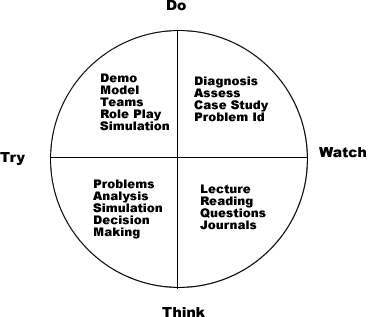
While there is no "good" or "bad" learning style, there can be a good or bad match between the way you best learn and the way a particular course is taught. Below is a diagram to guide you in adapting courses to your learning style: